Fire Adapted Communities & Fire Adapted Alaska
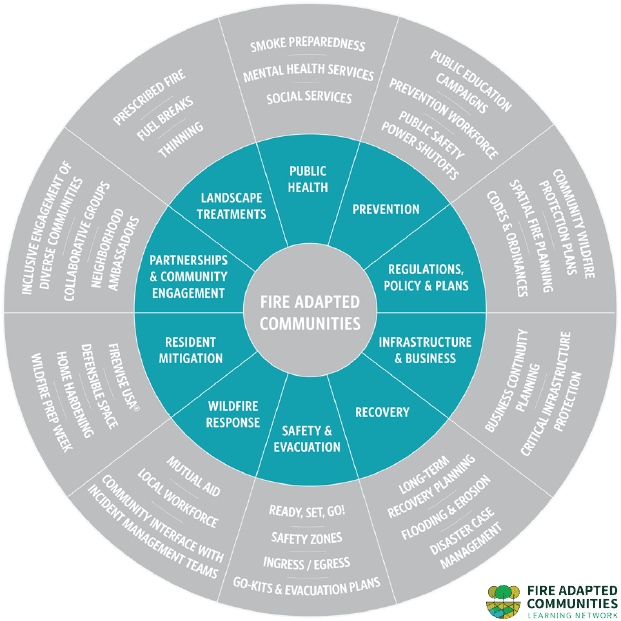
The fire adapted communities (FAC) framework is an approach to community wildfire resilience.
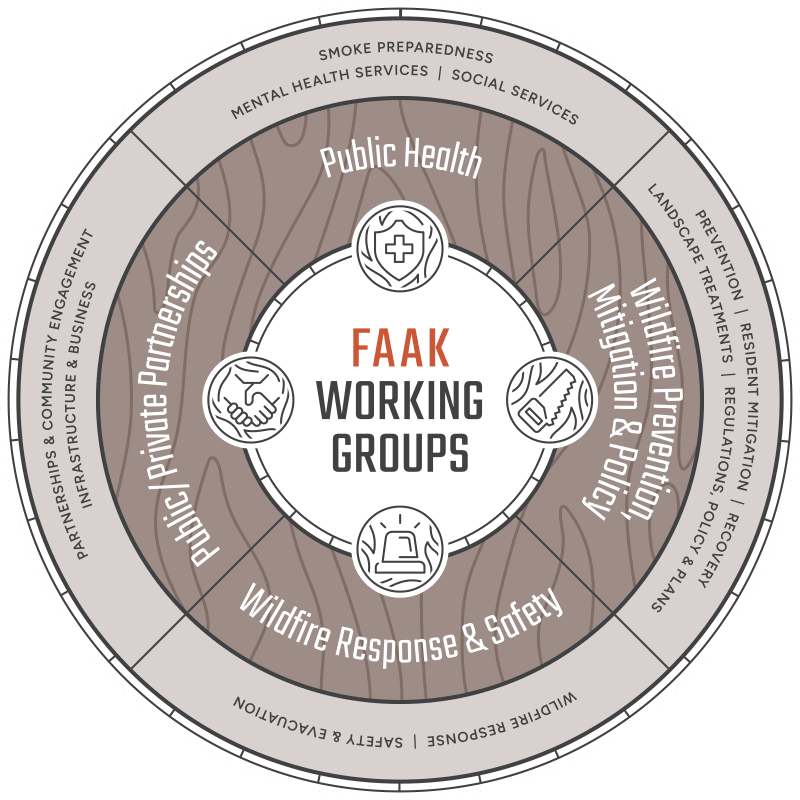
The framework provides a template for community wildfire adaptation, and gives examples of specific programs and activities that communities can undertake to reduce their wildfire risk. FAC is not a “one-size-fits-all” approach; every community is unique. The FAC framework graphic was created by the Fire Adapted Communities Learning Network with input from community-based practitioners from across the United States.
How Fire Adapted Alaska Is New
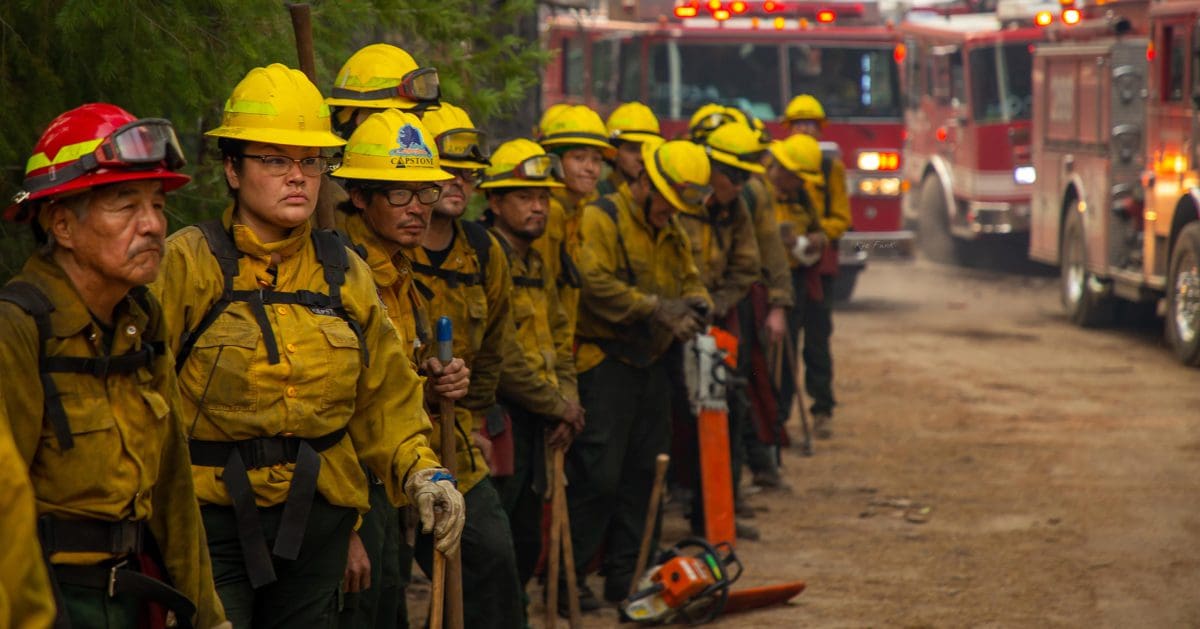
It centers local and Indigenous leadership.
Rather than taking a top-down approach, this initiative elevates community-based and culturally appropriate strategies—including Traditional Ecological Knowledge and local values—alongside Western science and policy.
It brings partners together under one umbrella.
Fire Adapted Alaska serves as a coordinating framework, connecting federal, state, tribal, local, and nonprofit partners to align priorities, share data, avoid duplication, and work more efficiently together.
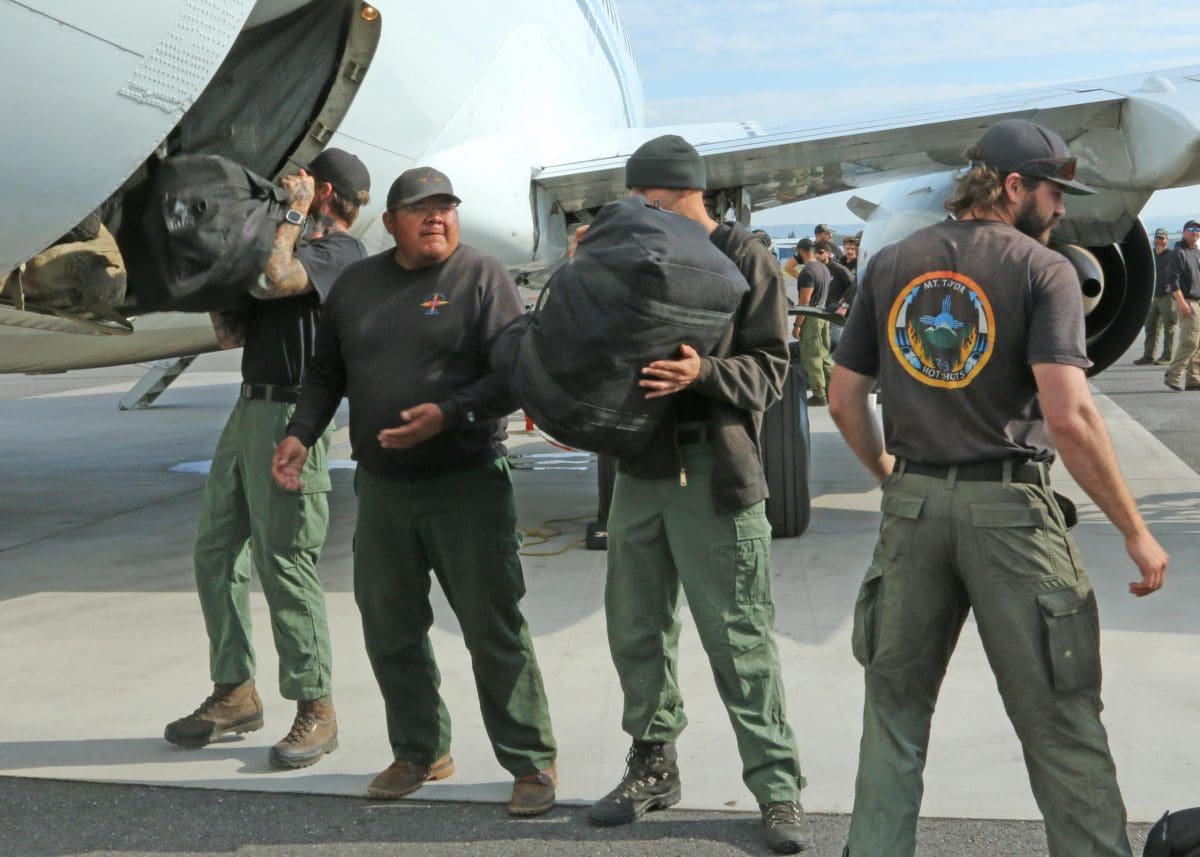
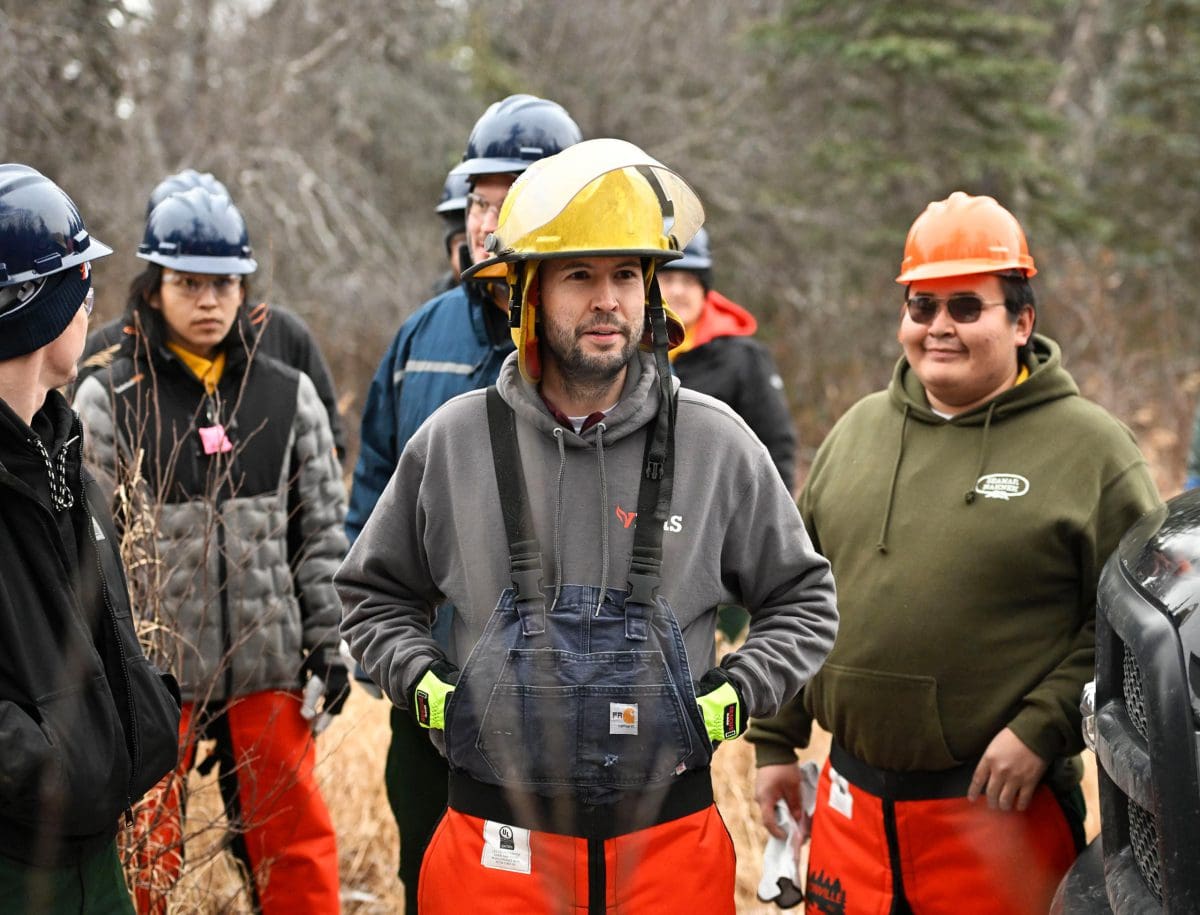
It builds capacity from the ground up.
By offering tools like trainings for community wildfire educators, grant writing support for mitigation projects, templates for CWPPs, and public education campaigns, Fire Adapted Alaska empowers communities to build local fire resilience capacity.
It’s statewide in vision but place-based in values.
Fire Adapted Alaska recognizes that every region—from Anchorage and the Mat-Su to the Yukon-Kuskokwim Delta—has different risks, values, and needs. The initiative offers a flexible model that supports locally driven solutions within a statewide framework.